
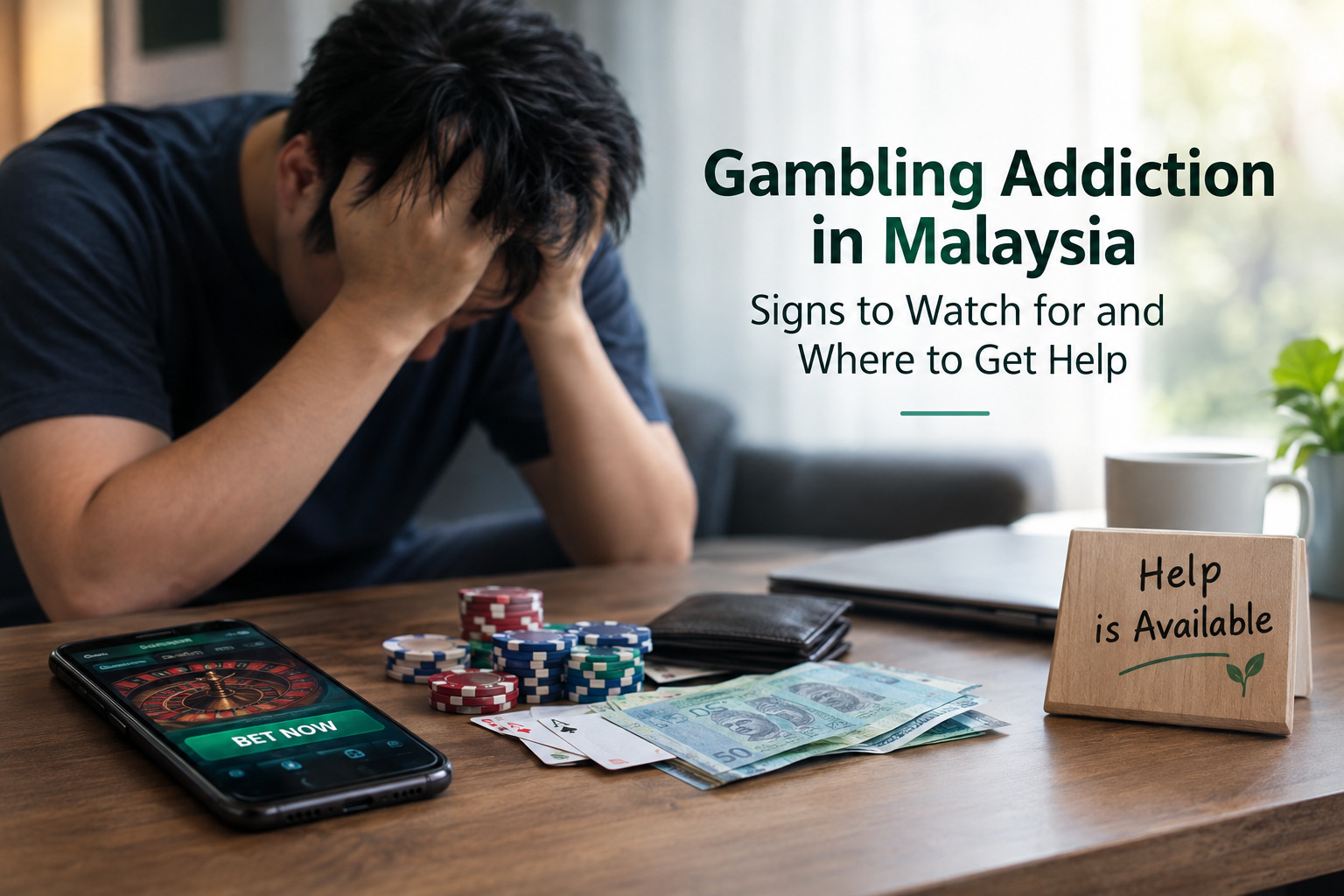
Gambling can begin as a form of entertainment, but for some people, it gradually becomes difficult to control. What starts as an occasional bet may develop into repeated gambling, financial problems, family conflict, and emotional distress. Recognising the warning signs early can help individuals and their families seek support before the situation becomes more serious.
Gambling Addiction in Malaysia is an important issue because gambling-related harm can affect people from different backgrounds, income levels, and age groups. Online betting, easy access to digital payment methods, and the desire to recover previous losses may make it harder for some individuals to stop.
The good news is that help is available. With appropriate professional support, practical financial safeguards, and ongoing recovery planning, people experiencing gambling problems can work towards regaining control of their lives.
What Is Gambling Addiction?
Gambling addiction, also called gambling disorder, is a condition in which a person struggles to control gambling despite experiencing harmful consequences. It may affect finances, relationships, work, education, and mental health.
Unlike occasional recreational gambling, problematic gambling can continue even when a person wants to stop. They may spend more money than planned, hide their activities, or repeatedly return to gambling after promising themselves they will quit.
People experiencing Gambling Addiction in Malaysia should not be dismissed as irresponsible or weak. Gambling problems can involve psychological, behavioural, and environmental factors. Understanding these factors is an important step towards seeking appropriate help.
Common Signs of Gambling Addiction to Watch For
Recognising changes in behaviour can help individuals and families respond early.
1. Spending More Money Than Intended
A person may repeatedly exceed their gambling budget, use money intended for household expenses, borrow from others, or struggle to pay bills because of gambling losses.
2. Chasing Previous Losses
One common warning sign is trying to win back lost money by gambling again. This can create a cycle in which further losses lead to more gambling rather than a decision to stop.
3. Hiding Gambling Activities
Someone may lie about how much they have spent, hide bank transactions, delete betting histories, or become defensive when family members ask questions.
4. Neglecting Family, Work, or Responsibilities
Gambling may begin to take priority over relationships, employment, education, and daily responsibilities. Some people may miss appointments, lose concentration at work, or withdraw from family activities.
5. Feeling Anxious, Irritable, or Restless
A person may experience distress when trying to reduce or stop gambling. Gambling problems can also occur alongside depression, anxiety, or other mental health concerns.
These signs do not automatically establish a diagnosis. However, repeated patterns of loss of control and harm are good reasons to seek a professional assessment.
Why Is Gambling Addiction Difficult to Overcome?
Gambling problems are not always driven by the hope of winning money. Some people gamble to escape stress, loneliness, anxiety, or difficult emotions. Others are drawn into repeated betting by the excitement of uncertain outcomes or the belief that a win is just around the corner.
Online gambling can add further challenges because betting platforms may be accessible at almost any time. Digital payments can also make spending feel less noticeable than using physical cash.
Financial pressure may then increase emotional distress, which can lead to further gambling. Breaking this cycle often requires more than willpower alone.
How Gambling Addiction Can Affect Mental Health
The effects of gambling can extend beyond money. Individuals may experience guilt, shame, sleep difficulties, relationship breakdown, and reduced confidence. In some cases, financial stress can contribute to anxiety symptoms or worsen an existing mental health condition.
People experiencing persistent fear, excessive worry, panic attacks, or other emotional difficulties may benefit from a mental health assessment. Panic Disorder in Malaysia is a related search topic for people seeking information about panic symptoms and treatment, although panic disorder and gambling disorder are different conditions.
A qualified mental health professional can assess these concerns and recommend suitable care. If someone feels overwhelmed by debt or gambling-related consequences, compassionate support can help them explore safer and more constructive next steps.
Where to Get Help for Gambling Addiction in Malaysia
Finding the right support depends on the person’s needs, the severity of the gambling problem, and any related mental health or financial concerns.
1. Speak to a Qualified Mental Health Professional
A psychologist, psychiatrist, counsellor, or other appropriately qualified professional can help assess gambling behaviour and identify contributing factors. Treatment may include cognitive behavioural therapy (CBT), motivational approaches, coping strategies, and relapse-prevention planning.
2. Explore Suitable Rehabilitation Support
A Rehab Center in Malaysia may be worth considering when gambling behaviour is seriously affecting daily life or when structured support is needed. Before choosing a provider, ask about its staff qualifications, assessment process, treatment methods, privacy practices, fees, and aftercare services.
Not every person with a gambling problem needs residential rehabilitation. Outpatient counselling or community-based support may be suitable for some individuals, while others may need more intensive care following a professional assessment.
3. Contact Appropriate Public or Community Services
Individuals and families can seek guidance through government health services, qualified private practitioners, and relevant community support organisations. In Malaysia, the Ministry of Health and public healthcare facilities can be starting points for discussing mental health concerns and available referrals.
Check the current eligibility, service availability, and contact details directly with the relevant provider before attending.
4. Put Financial Safeguards in Place
Practical steps can help reduce immediate harm while treatment is arranged. These may include:
- Limiting access to gambling websites and applications.
- Asking banks or payment providers about available gambling-related transaction controls.
- Setting spending limits and removing saved payment details where appropriate.
- Avoiding loans intended to recover gambling losses.
- Seeking independent debt advice and making a realistic repayment plan.
Where appropriate and agreed upon, a trusted family member may help the person monitor essential expenses. Financial safeguards should support recovery rather than become a source of threats or humiliation.
How Green Wings Recovery Centre Can Fit Into the Recovery Journey
Choosing support should begin with an honest assessment of the person’s needs. Green Wings Recovery Centre, based in Wilayah Persekutuan Kuala Lumpur, Malaysia, focuses on holistic mental health support and personalised care.
For individuals or families exploring help for gambling-related difficulties, contacting the centre can be a starting point for asking about assessment, suitable programmes, professional qualifications, and available support. Confirm directly whether the services offered are appropriate for gambling disorder and whether any specialist referrals are needed.
Under the leadership of Raagidhasakti, CEO and Clinical Director, enquiries can be directed to enquiry@greenwings-psy.com. The centre’s team can clarify the services it currently provides and explain the next steps for prospective clients.
Recovery support should be transparent, respectful, and tailored to the individual. A suitable provider should explain treatment options, confidentiality, costs, and follow-up arrangements before a person commits to a programme.
How Families Can Support Someone With Gambling Problems
Family members often feel frustrated, worried, or unsure how to help. A calm and practical approach can make it easier to begin a conversation.
- Choose a suitable time to talk: Discuss concerns privately, without accusations or arguments.
- Focus on specific behaviours: Explain how gambling has affected finances, trust, or daily responsibilities.
- Encourage professional help: Offer to help find a qualified practitioner or arrange an initial appointment.
- Set healthy financial boundaries: Protect household funds and avoid repeatedly covering gambling debts without a clear plan.
- Recognise progress: Recovery can involve setbacks. Encourage honest communication and continued engagement with appropriate support.
Families should not feel responsible for controlling another person’s every decision. They can offer encouragement while protecting their own emotional and financial well-being.
Preventing Relapse and Building a Healthier Routine
Recovery involves more than stopping gambling for a short period. It also means understanding triggers, developing healthier coping skills, and planning for difficult situations.
A recovery plan may include regular counselling, managing access to money, avoiding gambling-related environments, rebuilding relationships, and finding activities that provide purpose and enjoyment. Support groups may also help some people feel less isolated.
If a setback occurs, it is important to review what happened and seek additional support rather than assume recovery is impossible. A qualified professional can help adjust the plan to address new challenges.
Conclusion
Gambling Addiction in Malaysia can affect financial stability, mental health, family relationships, and everyday life. Warning signs such as chasing losses, hiding betting activities, borrowing money, and neglecting responsibilities should be taken seriously.
The right response is not shame or blame, but informed action. Professional assessment, suitable counselling, financial safeguards, family support, and ongoing recovery planning can help people move towards healthier choices.
If gambling is becoming difficult to control, consider reaching out to a qualified mental health professional or an appropriate support service. Green Wings Recovery Centre in Kuala Lumpur can also be contacted to enquire about its current services and whether they are suitable for the person’s needs.
Frequently Asked Questions
1. What are the early signs of gambling addiction?
Early signs may include spending more than intended, repeatedly trying to recover losses, hiding gambling activities, borrowing money, and neglecting work or family responsibilities.
2. Can gambling addiction be treated in Malaysia?
Yes. People can seek assessment and support through qualified mental health professionals, counselling services, and appropriate treatment providers in Malaysia. The right approach depends on individual needs and the severity of the problem.
3. Does everyone with gambling addiction need a rehabilitation centre?
No. Some people benefit from outpatient counselling or community-based support. More intensive or residential care may be appropriate for others, depending on their circumstances and professional assessment.
4. How can family members help someone who gambles excessively?
Families can express concerns calmly, encourage professional help, establish clear financial boundaries, and support healthier routines. They should avoid shaming the person or taking responsibility for every gambling-related consequence.
5. Where can I enquire about gambling-related support at Green Wings Recovery Centre?
You can contact Green Wings Recovery Centre at enquiry@greenwings-psy.com or enquire about its services in Wilayah Persekutuan Kuala Lumpur, Malaysia. Ask about current treatment options, staff qualifications, costs, confidentiality, and whether specialist gambling-disorder care or referral is available.