
Anxiety is a normal emotional response to stress, uncertainty, or challenging situations. However, when persistent worry, fear, restlessness, or physical symptoms begin to interfere with work, relationships, sleep, or everyday activities, professional support may be needed. Anxiety disorders are among the most common mental health conditions worldwide, but effective treatments are available.
For individuals and families searching for Anxiety treatment in Malaysia, understanding the available options is an important first step. The right approach depends on the person’s symptoms, overall health, preferences, and level of support required. A professional assessment can help identify the nature of the problem and guide an appropriate care plan.
Understanding When Anxiety Becomes a Concern
Everyone experiences anxiety from time to time. The difference is often seen in the intensity, duration, and impact of symptoms.
Someone experiencing an anxiety disorder may have excessive worry, difficulty concentrating, irritability, muscle tension, restlessness, sleep difficulties, sweating, trembling, rapid heartbeat, or recurring feelings of fear. Some people may also begin avoiding situations that make them uncomfortable.
When these experiences become persistent and start affecting daily functioning, seeking Anxiety treatment in Malaysia can be a practical and responsible step rather than something to delay.
It is also important to remember that anxiety can appear differently from one person to another. A qualified professional can assess symptoms instead of relying on online information or self-diagnosis.
Why Professional Assessment Matters
Choosing effective Anxiety treatment in Malaysia should begin with understanding the individual, rather than simply selecting a treatment based on symptoms found online.
A professional assessment may consider:
- The type, frequency, and severity of anxiety symptoms
- Sleep, mood, and daily functioning
- Previous mental health concerns
- Physical health and medications
- Substance or alcohol use
- Family and social circumstances
- Previous treatment and response to it
This broader assessment is important because anxiety can occur alongside other mental health or substance-use concerns. For example, some individuals may require support that addresses anxiety alongside Addiction treatment in Malaysia or Alcohol Addiction Treatment in Malaysia.
Likewise, individuals searching for Drug Addiction Treatment in Malaysia, Schizophrenia Treatment in Malaysia, Bipolar treatment in Malaysia, or ADHD Treatment in Malaysia may have different clinical needs. These conditions should not be treated as interchangeable, and professional assessment is essential when more than one concern is present.
What Can Anxiety Treatment Involve?
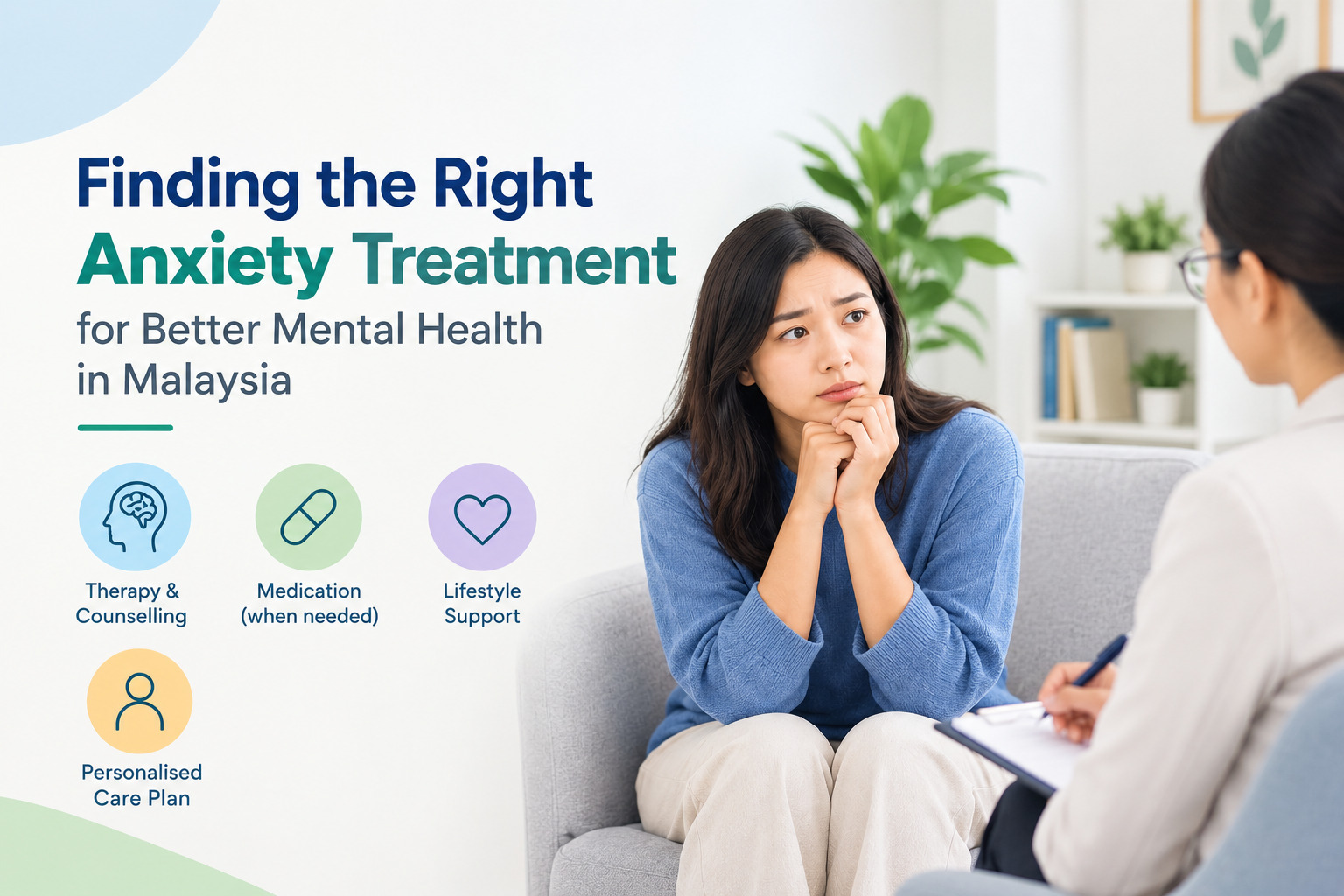
There is no single treatment plan that works for everyone. Evidence-based care may include psychological therapies, medication when clinically appropriate, lifestyle support, or a combination of approaches.
Psychological Therapy and Counselling
Psychotherapy is an important part of modern anxiety care. Cognitive behavioural therapy (CBT), for example, can help people recognise unhelpful thought patterns and develop healthier ways of responding to anxiety. Other approaches may also be considered depending on the person’s needs.
A good Anxiety treatment in Malaysia programme should therefore focus not only on reducing immediate symptoms but also on helping individuals develop practical coping skills they can use in everyday situations.
Medication When Clinically Appropriate
For some people, medication may form part of their treatment plan. Certain antidepressants, including SSRIs and SNRIs, may be used for anxiety disorders, while other medicines may be considered in specific circumstances. Medication decisions should always be made with a qualified healthcare professional because individual medical history, possible side effects, interactions, and treatment goals need to be considered.
Medication should not be started, stopped, or changed without appropriate medical guidance.
Lifestyle and Coping Support
Professional care can be supported by healthy daily habits. Regular physical activity, consistent sleep and meal routines, relaxation techniques, mindfulness, and reducing alcohol or illicit drug use may support overall mental well-being.
These habits are not a substitute for professional care when anxiety is severe, but they can complement an individualised treatment plan.
Choosing the Right Anxiety Treatment in Malaysia
Finding suitable Anxiety treatment in Malaysia involves looking beyond a facility’s name or promotional claims. Individuals and families should consider whether the centre provides a structured and respectful approach to care.
Important factors may include:
Qualified professionals: Look for appropriate mental health expertise and transparent information about who provides care.
Individualised planning: Anxiety does not affect everyone in the same way. Treatment should take the individual’s needs, circumstances, and goals into account.
Ongoing monitoring: Good care involves reviewing progress and adjusting the approach when necessary.
Confidentiality and dignity: Mental health support should be delivered in an environment where privacy and respectful communication are taken seriously.
Family involvement when appropriate: With the individual’s consent, family education and support can sometimes strengthen recovery and improve understanding.
Clear communication: A trustworthy provider should explain treatment options, expected outcomes, limitations, and when additional medical care may be required.
For people considering Anxiety treatment in Malaysia, these factors can help separate meaningful professional support from approaches that rely mainly on broad promises.
Creating a Safe and Responsible Recovery Environment
The treatment environment also matters. A professional rehabilitation or mental health facility should maintain appropriate standards for cleanliness, privacy, safety, emergency preparedness, and responsible facility management.
Environmental responsibility can also form part of good organisational practice. Appropriate waste handling, hygienic surroundings, safe use of resources, fire-safety procedures, and compliance with applicable local requirements contribute to a healthier care environment.
At Green Wings Recovery Centre, a holistic approach to mental health focuses on sustainable support that considers the person’s individual needs and overall quality of life. The goal of professional care should be to help individuals move toward healthier functioning while maintaining dignity and respect throughout the process.
When Should You Consider Professional Support?
You do not need to wait until anxiety becomes overwhelming before asking for help. Consider speaking with a qualified professional if anxiety is persistent, difficult to control, affecting sleep, interfering with work or relationships, or causing significant distress.
Early support may make it easier to understand what is happening and identify appropriate treatment options. Professional Anxiety treatment in Malaysia can provide a structured path for people who are finding it difficult to manage symptoms independently.
If anxiety is accompanied by thoughts of self-harm, suicidal thoughts, severe confusion, or another immediate safety concern, urgent professional or emergency assistance should be sought.
Why Personalised Care Can Make a Difference
Mental health recovery is not a one-size-fits-all process. Two people can experience similar anxiety symptoms while having very different causes, triggers, support systems, and treatment preferences.
That is why Green Wings Recovery Centre emphasises personalised and holistic support rather than assuming that one approach is suitable for everyone. A thoughtful treatment plan can address emotional well-being while also considering relationships, daily routines, coping strategies, and broader recovery goals.
For individuals exploring Anxiety treatment in Malaysia, choosing a provider that values personalised care, professional guidance, and long-term well-being can be an important part of the decision-making process.
Building a Healthier Future With the Right Support
Seeking help for anxiety is not a sign of weakness. It can be a positive decision to protect mental health and improve quality of life.
The right Anxiety treatment in Malaysia should be based on professional assessment, evidence-informed approaches, individual needs, and ongoing support. Whether treatment involves psychotherapy, medication, lifestyle changes, or a combination of approaches, the objective should be meaningful improvement rather than unrealistic promises of an instant cure.
Green Wings Recovery Centre aims to support individuals through a compassionate and structured approach to mental health care. By focusing on sustainable solutions and personalised support, professional care can help individuals work toward greater stability, confidence, and day-to-day well-being.
Frequently Asked Questions
1. What is the most effective Anxiety treatment in Malaysia?
There is no single treatment that is best for everyone. Psychological therapies such as CBT are commonly used, while medication may also be appropriate for some individuals. The right option depends on symptoms, medical history, preferences, and professional assessment.
2. When should someone seek anxiety treatment?
Professional support may be appropriate when anxiety is persistent, difficult to control, causes significant distress, or interferes with work, relationships, sleep, or daily activities.
3. Can anxiety be treated without medication?
Yes. Psychological treatments are important evidence-based options for anxiety disorders, and some people may benefit from psychotherapy without medication. Treatment decisions should be made with a qualified professional.
4. Can anxiety occur with other mental health conditions?
Yes. Anxiety can occur alongside other mental health or substance-use conditions. When multiple concerns are present, a comprehensive assessment can help determine appropriate care.
5. How can I choose a suitable treatment centre in Malaysia?
Consider the qualifications of professionals, individualised treatment planning, privacy, safety, progress monitoring, communication, and transparency about treatment approaches. Avoid providers that promise guaranteed or instant results.